

What Materials Can Filter Water
Anyone who has considered investing in a h2o filtration organization probable knows about (or has come across the term) "filter media." And no, we aren't talking nearly movies and music.
Filtration media, a powdery substance that varies in thickness, is the unsung hero of h2o filtration systems. People are more likely to know almost filtration system applied science than they are to know well-nigh the media used in these systems — but that'southward a mistake. Anyone who wants to make the most out of their water filter should become the low down on media. Not only is it important to understand how h2o is filtered, but information technology'southward also important to discover a filter (and accompanying filtration media) that is personalized to the toxins specific to their h2o source.
TREATED, But Non FILTERED
Water utilities will employ either chloramines or chlorine to disinfect your water supply. Believe it or not, maintaining residual chlorine or chloramines in the h2o after information technology'south left the handling plant is a regulatory requirement meant to make sure the water remains pathogen-free equally it travels to your domicile. Typically, big utilities will employ chloramines as it does not dissipate as quickly and it will produce fewer disinfection byproducts (like THMs and chloroform).
In that location are a number of approaches to water filtration. The most popular systems include activated carbon, reverse osmosis, mixed media, and UV filters.
Although adding chlorine to treated water has saved countless people over the years from waterborne diseases, information technology is as well one of the reasons many people do not like the taste and smell of their tap water. Chlorine in the water can also accept a drying effect on the peel and hair since information technology'due south a strong oxidant. It'due south important to proceed up the chlorine residual in the h2o system; however, there are no health benefits of actually consuming it. To decide which filter media product is the most effective at removing the chlorine, check the water quality study provided by the water utility and find out if the utility uses chlorine or chloramine.
Not ALL FILTERS ARE EQUAL
Agreement how your h2o is treated volition help you sympathise which media y'all need to filter your water. And believe us, there are many different approaches to h2o filtration. The most popular systems include activated carbon, opposite osmosis, mixed media, and UV filters. Still, well-nigh systems use a combination of these methods for optimal filtration.
Ultimately, the blazon of organization that'due south ideal for a home depends on the h2o quality of that region. Water quality relies heavily on the h2o source (lake, river, etc), chemicals used at the water treatment facility, and additional information about the city'due south water infrastructure. For instance, even the pipes in a home tin exist a contaminant contributor if they contain lead, copper, or other leaching heavy metals. For more information on water quality in a certain region, search for your metropolis's Water Quality Report. Yous tin besides employ an like shooting fish in a barrel zilch code lookup tool provided by the EWG here .
POPULAR WATER FILTRATION MEDIA
Virtually filtration systems include a pace where h2o passes through media. Filtration media is the workhorse of these systems, ridding water of a number of impurities. The type of impurities that the filtration system removes depends wholly on the media. While sure media remove a broad range of toxins, others hone in on just a few impurities. Below are seven popular mediums used in drinking water filtration systems.
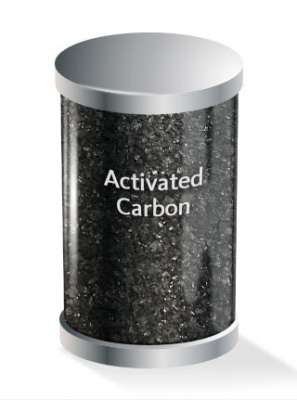
1. Activated Carbon
The almost popular media by far is activated carbon. Created when organic material with high carbon content (similar forest, coal, or coconut shells) is heated in such a way that information technology does not burn, it instead results in char. The char is then treated to create a porous material that binds to sure toxins and impurities thus pulling them out of the water flowing through the system. Over again, it'southward important to note that not all activated carbon is made with the same base material. While activated carbon is sometimes fabricated from coal, it tin likewise exist fabricated from coconut shells, which has a substantially smaller environmental impact.
Activated carbon is institute in almost every water pitcher filter, water bottle filter, and virtually whole home water filtration systems . Information technology removes organic contaminants, chlorination byproducts, lead, copper, and sure pesticides. It also mitigates the unpleasant chlorine taste and odor left behind by the water treatment facility.
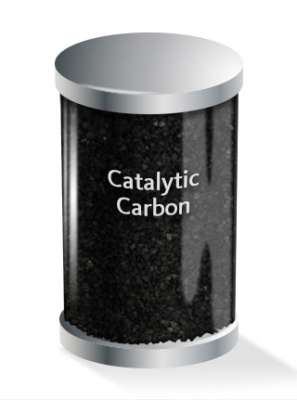
2. Catalytic Carbon
Catalytic carbon is a class of activated carbon that is enhanced to increase its catalytic adequacy. It's primarily used to rid water of chloramine, which is a chemic that is increasingly used at water treatment facilities to disinfect water. Chloramine has grown pop considering of its staying ability so that as water moves through the pipes, it doesn't fall prey to leaner. But for this same reason, it's incredibly hard to accept chloramine out of the water once it reaches the tap, unlike chlorine. While activated carbon gets rid of a small percentage of chloramine, catalytic carbon removes a majority of chloramine from drinking h2o.
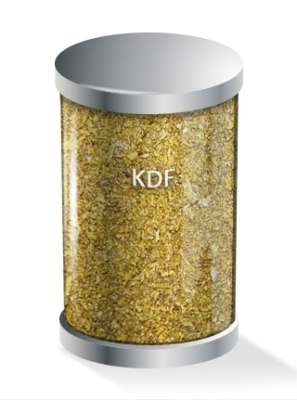
3. KDF (Kinetic Degradation Fluxion)
This media primarily consists of copper and zinc particles and is used to reduce the levels of water-soluble heavy metals, including chlorine, iron, and hydrogen sulfide. Information technology too manages calibration, leaner, and algae in the water. It'south extremely efficient at removing chlorine, but it does not perform besides as carbon/GAC in removing chloramine. Alternatively, this media is cheaper to operate, lasts a long time, and works better at higher temperatures than carbon so it performs well on warmer h2o. Employ of KDF media upstream of a carbon filter works quite well. The KDF extends the life of the machinebon, and the carbon works well reducing the chloramine and THM levels.
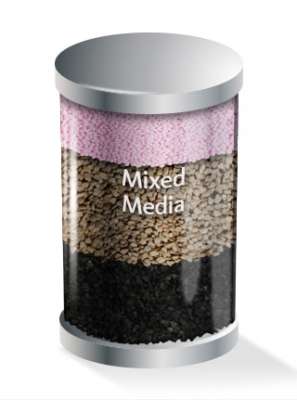
iv. Mixed-Media
This is somewhat of a catchall. Mixed media can be almost anything and, equally the name suggests, is a mix of different mediums to remove more than impurities and toxins. These media can include gravel, to filter sediment out of the water, resin to filter tannins out of the water, or catalytic carbon to reduce chloramine levels.
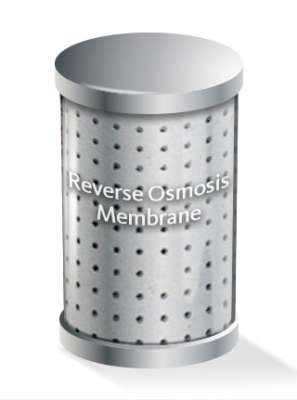
5. Opposite Osmosis Membrane
The contrary osmosis procedure is an incredibly pop filtration organization that removes a large percentage of impurities from water, including some dangerous ones like asbestos and hexavalent chromium. It works by pushing h2o through a semi-permeable membrane that allows h2o molecules through but traps water-soluble toxins like heavy metals, organics, leaner, and pyrogens.
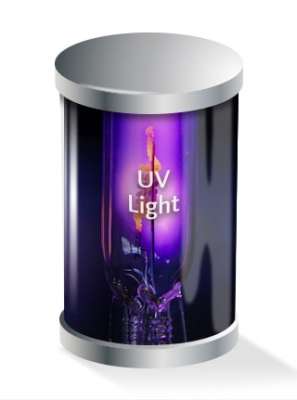
vi. Ultra violet low-cal (uv Filtration)
Water is pumped into a bedchamber which houses an ultraviolet seedling. The ultraviolet rays produced are fine-tuned to a frequency that all-time attacks microbes. These rays pierce the cell walls, damaging contaminants and their Deoxyribonucleic acid and so that they tin can't reproduce. This renders dangerous contaminants, such as Due east.Coli and giardia completely harmless.
The use of UV filtration tin can be institute at all levels of water treatment. Non merely is it known to be an effective manner to eliminate the dangers of bacteria and viruses, but it as well does and so without tainting the water with harsh chemicals.
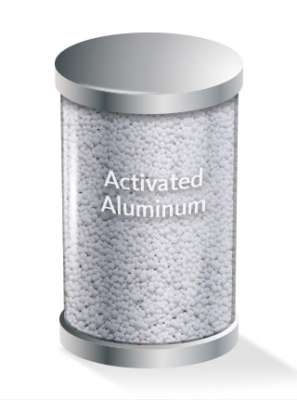
7. Activated Aluminum
Mostly constitute in an ion exchange unit , activated aluminum removes magnesium and calcium, which are 2 minerals that crusade "difficult water." It tin can likewise remove fluoride and arsenic if water spends enough contact time with this media type. Depending on the type of activated aluminum, it tin can filter out radium and barium. Activated aluminum is as well referred to as a resin.
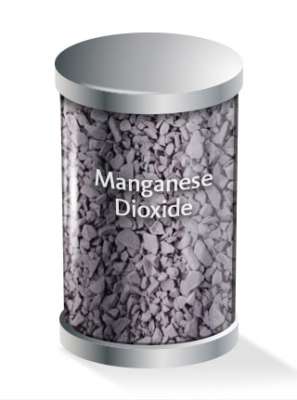
8. Manganese Dioxide
There are a few types of media in which the chief ingredient is manganese dioxide. These media reduce iron, manganese, and hydrogen sulfide in h2o. While fe itself is important for wellness, it acts as a secondary contaminant in water, causing problems while making tea or coffee and cooking vegetables. Excess iron in drinking water can lead to blood-red-brown stains tableware and laundry.

What Materials Can Filter Water,
Source: https://www.aquasana.com/info/8-popular-water-filtration-medias-pd.html
Posted by: hollandthomfor.blogspot.com
0 Response to "What Materials Can Filter Water"
Post a Comment