

Why Would A Garden Be Beneficial To Pollinators And To A Plant And Animal Community?
Pollinators, specially bees, play a pregnant role in maintaining the function and diversity of ecosystems through their unique relationship with native flowering plants. Simply the ongoing degradation of native pollination systems, coupled with the connected loss of insect biodiversity, pose a significant threat to human health and well-existence, and to the world'southward futurity.
Equally the late biologist and naturalist Edward O. Wilson in one case said about these vital invertebrates: "If all mankind were to disappear, the world would regenerate back to the rich land of equilibrium that existed ten thousand years agone. If insects were to vanish, the environs would collapse into chaos."
Like Wilson, Robert Gegear, banana professor of biology at the University of Massachusetts Dartmouth, also appreciates the importance of insects. Eight years agone he launched the Beecology Project to learn more nigh the ecology of native pollinators — the initial focus was on bees, specifically bumblebees — to ameliorate sympathize why some species are doing then poorly while others are thriving, or at least property steady.
Gegear said certain pollinators are heading toward extinction, such as the rusty patched bumblebee, while others are increasing in numbers, such as the eastern bumblebee.
Overall, though, the news is bleak. Gegear noted there are 52 butterfly species in New England that are in pass up.
"Wild pollinators have declined in affluence, variety, and geographic distribution at an alarming rate over recent years," according to the opening paragraph on the Beecology Project website. "These declines pose a significant threat to ecosystem health and biodiversity."
Total insect mass is decreasing by 2.5 pct annually, according to a 2019 report. It points to troubles ahead. Insects are both pollinators and a food source for amphibians, birds, fish, reptiles, and some humans.
More than xl pct of insect species are declining and a third are endangered, with collywobbles and moths amongst the worst hit, according to the 2019 peer-reviewed scientific paper published in the journal Biological Conservation. The study noted that intensive agriculture is the principal driver of insect pass up, peculiarly the overuse of pesticides. Evolution and the climate crisis just serve to accelerate their demise.
"Unless we change our ways of producing food, insects as a whole will go down the path of extinction in a few decades," the study's authors wrote. "The repercussions this volition take for the planet's ecosystems are catastrophic to say the least."
One of the issues, among the many, is a lack of information that would let for the development of effective conservation and restoration strategies for threatened species. How to recreate landscapes, destroyed by relentless building and poisoned by chemicals, that truly back up pollinator biodiversity is a circuitous issue that goes beyond observing insects buzzing for nectar around flowers.
Gegear's work with the Beecology Project is attempting to fill this cognition gap, in function by recruiting citizen scientists from beyond southern New England to digitally collect and submit ecological information on native pollinator species.
In environmental, Gegear said, it is nigh diversity — not how many individuals at that place are but how many species there are — considering each species has a connexion with a flowering constitute that has a connection to other species.
Native bees, for instance, have vastly different flower preferences than honeybees, which were imported from Europe.
"The survival of native pollinators has a positive cascading result on so many other species, both the wild plants they pollinate and the other wildlife using those plants for food, shelter and nest sites," he told ecoRI News in 2020 in a story with the headline Plight of Pollinators Isn't Limited to Honeybee Collapse. "Collectively, those relationships are increasing ecosystem health. Simply as we offset to remove pollinators, nosotros start to affect all these other species."
For example, as species of bumblebees that were once common in southern New England fade, such the xanthous-banded bumblebee, the yellowish bumblebee, the half-black bumblebee, and the aforementioned rusty patched bumblebee, the impact doesn't end with their disappearance. The plants they bonded with over centuries besides are impacted.
"Some native plants are in decline as well," Gegear said. "Some of the bees in pass up are some of the best pollinators of these plants. We need to rebuild systems."
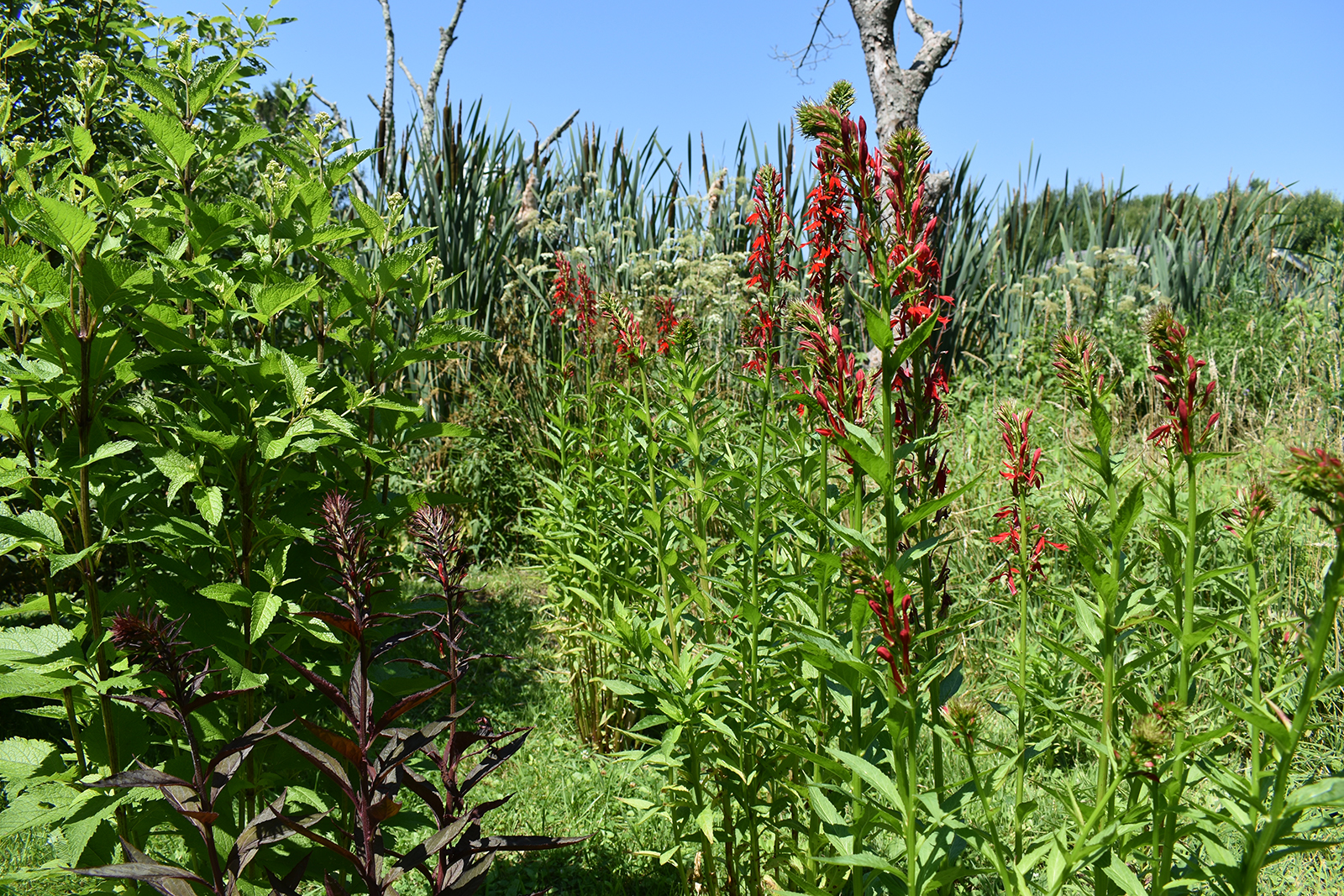
Through foraging and natural movements, pollinators, such as bees, beetles and collywobbles, transfer pollen, assuasive the fertilization and subsequent fruiting of trees and plants.
Of all flowering plants, 85 percent require an animal — mostly insects, merely also vertebrates such as birds and bats — to transfer pollen. Pollinators likewise business relationship for the fertilization of some 35 percent of crop production worldwide, with a value of nearly $220 billion annually.
The part of the pollinator/plant/creature biodiversity reject that goes largely unnoticed, however, is the bear on on ecosystem services. Interactions between native species, which have co-evolved for millenniums, support the sequestration of carbon, soil decomposition, and h2o purification. Their significance goes style beyond food production.
"We are getting these services for free, merely because of a massive reduction in biodiversity nosotros are losing these services," said Gegear, whose work focuses on restoring the functional role of pollinators and studying fauna-blossom interactions. "Once nosotros lose this stuff, we're non getting it back. Nosotros cannot replicate these services and systems."
While many home gardeners want to assist support pollinator biodiversity, Gegear noted data are nonetheless being gathered to inform them on what they should be planting, especially when it comes to alluring bumblebees. The Beecology Project has already provided some answers.
Using eight years of live surveys, observations and other research techniques — much of information technology obtained on a 40-acre bundle of conserved land in Southborough and at Gegear'southward outside laboratory in Dartmouth — the UMass professor and his team have created a listing of native plants that support local bumblebee species at risk, as well equally other bee species and butterflies. (The list is for Massachusetts, but Gegear said information technology tin can likewise be mostly applied to Rhode Island and Connecticut.)
The preference of pollinators varies by species, but, in general, native insects prefer native plants. That human relationship, though, is much more complicated than that unproblematic premise. It can take a diversity of plants to support i pollinator species, every bit many insects crave a host plant plus sources for nectar and pollen. Those three needs aren't typically provided past a single plant species.
The needs within a species can too exist varied. For instance, short-tongued bees are attracted to loving cup-shaped flowers, while long-tongued bees adopt tubular ones. The preference of medium-tongued bees falls somewhere in between. Gegear said many residential and commercial landscapes lack tubular flowers.
At both the Southborough and Dartmouth sites, where native plants of all shapes and sizes have been planted, Gegear said the reintroduction of a diverse collection of native plantings has resulted in the emergence of pollinators and birds, such as the white-throated sparrow, that are regionally in turn down.
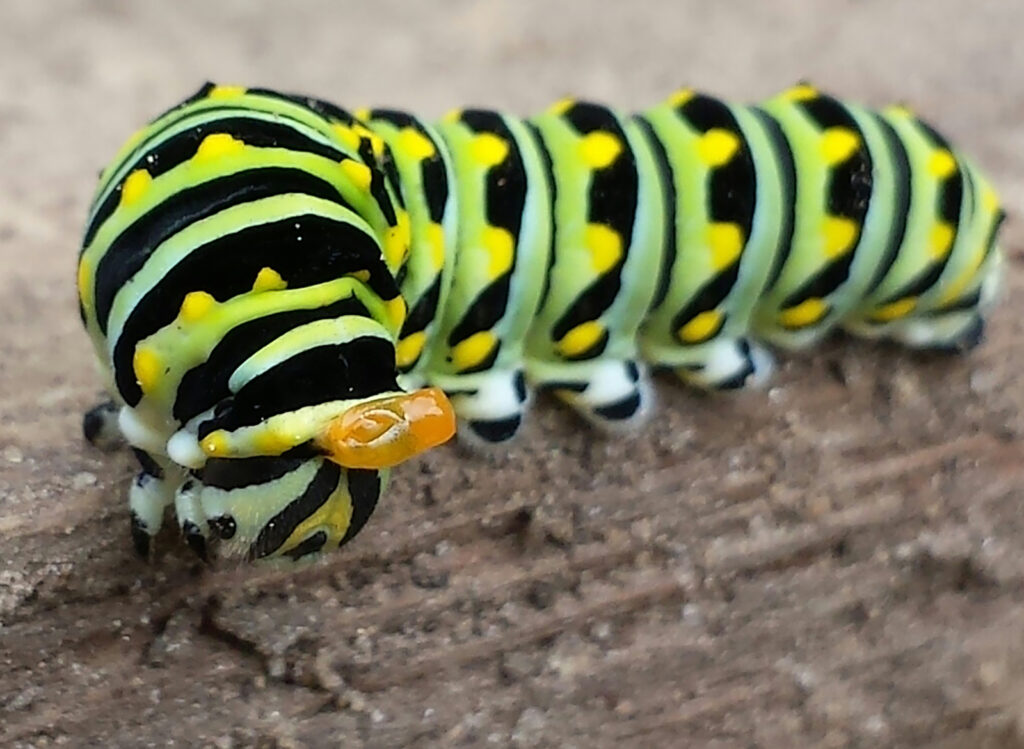
Every bit Gegear and his research squad go on to discover what native plants support what native insects, there are things concerned backyard gardeners tin do at present to help protect and restore native pollination systems and the ecosystems they back up: institute native species; supplant lawns with meadows and gardens; and lay off the use of pesticides and herbicides.
Gegear offered tips for home gardeners interested in supporting pollinators:
Select nectar and pollen plants then at that place are blooms in every season (March-May) (June-July) (August-September).
Spring floral resource are of import for at-hazard pollinators, so give them a high priority.
Be aware that in most cases, the species of a plant is far more beneficial to pollinators than named cultivars.
Select plants that target every bit many species of pollinators every bit possible, as a good habitat will support species at risk over the unabridged season.
Leave some soil bare for footing-nesting bees.
The National Audubon Society also offers some suggestions to back up and encourage the diversity and wellness of pollinators:
Go natural with your lawn. Let flowers such every bit clover and dandelions to grow.
Select native New England flowering plants and bushes. Use pollen-producing plants in planters and on apartment balconies. (While eastern bumblebees are attracted to non-native plants, other bumblebees don't like foreign varieties.)
Refrain from clearing leafage litter and cutting erstwhile establish stalks every bit insects lay their eggs in these and use them for overwintering shelter.
Leave dead trees on your property, as many pollinators apply decaying trees to lay their eggs and pupate into adults.
Categories
Join the Word
View Comments
Source: https://ecori.org/push-to-protect-pollinators-starts-at-home/
Posted by: hollandthomfor.blogspot.com
0 Response to "Why Would A Garden Be Beneficial To Pollinators And To A Plant And Animal Community?"
Post a Comment